
If you are curious about the equipment shown here, or wondering what a “computerised” spinal assessment actually involves, you are not alone. I use computerised spinal analysis at my South Perth practice as one part of understanding how a person’s spine is moving and responding.
The instrument gives me a set of measurements that I can discuss with you. It does not replace listening to your concerns, examining how you move or arranging medical imaging when that is clinically appropriate. It is simply one more piece of information to consider as part of the broader picture.
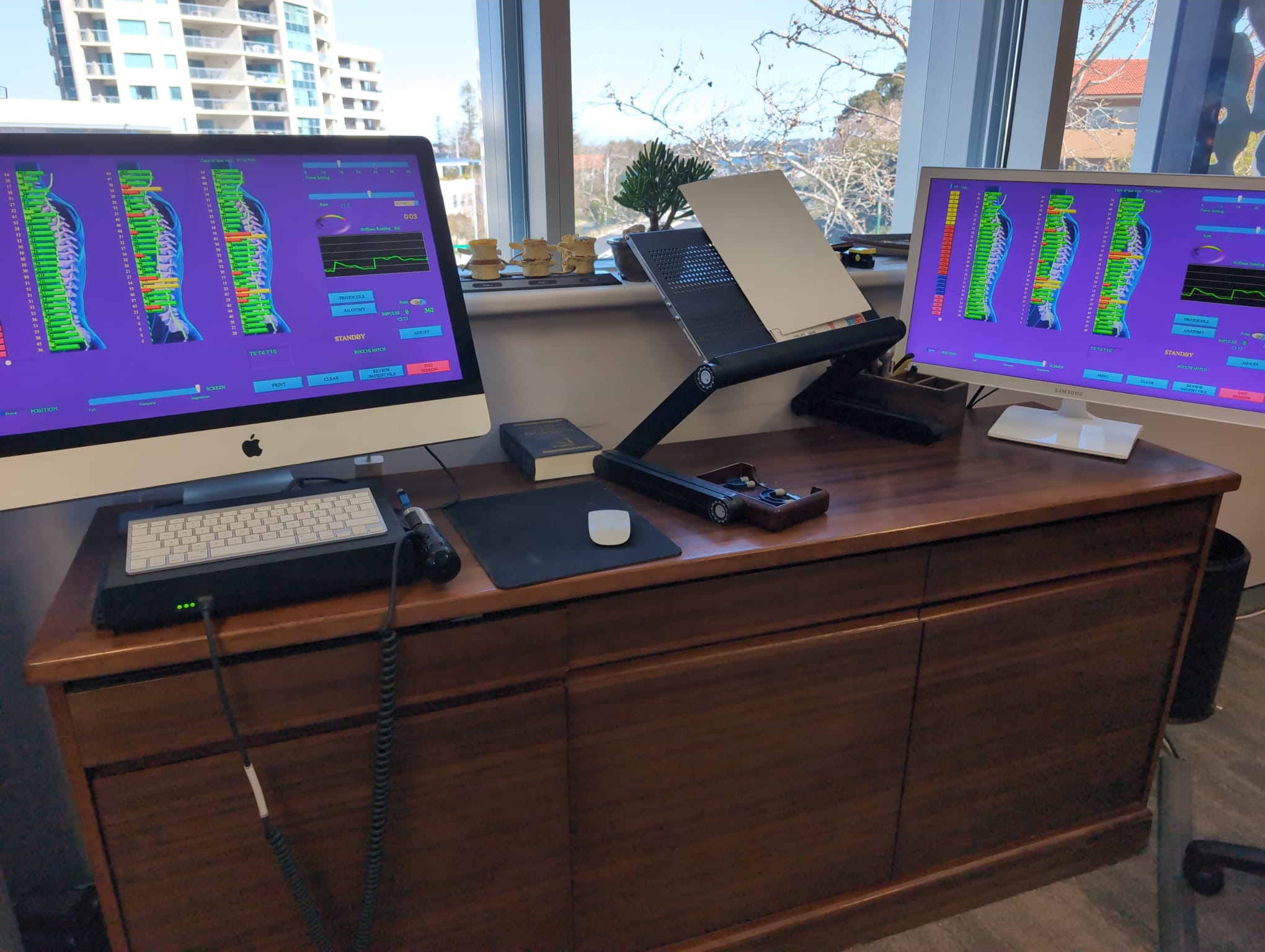
Computerised spinal analysis at a glance
- I use a handheld instrument to take measurements from selected areas of the spine.
- It does not use ionising radiation or create an image like an X-ray, CT scan or MRI.
- I consider the readings alongside what you tell me and what I find during your physical examination.
- Not every patient needs this assessment, and a reading does not provide a diagnosis on its own.
How does computerised spinal analysis work?
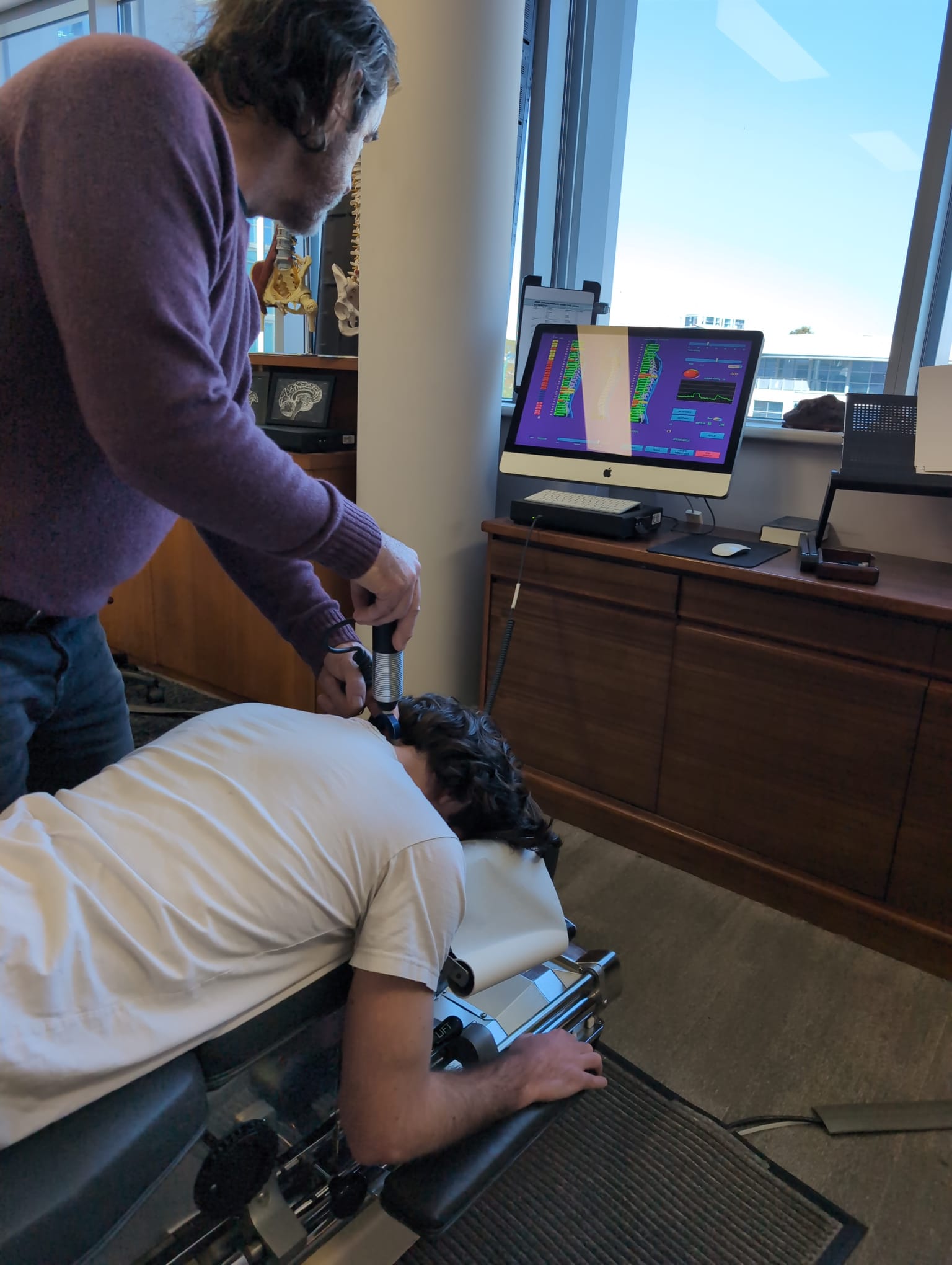
During the assessment, I place the handheld instrument against selected areas of your spine. It applies a light mechanical input and records the relative mechanical response at each point. The software displays the readings as bars or graphs, which I review alongside your history and physical examination.
More specifically, the system records resistance to a small mechanical impulse—sometimes described as spinal compliance. A published study of the PulStar instrument found good-to-excellent measurement reliability between trained examiners. This relates to the consistency of the measurement; it does not mean the reading can diagnose the cause of pain, identify tissue damage or predict how someone will respond to care. You can read the study abstract on PubMed.
How do I use the readings?
I use the readings as one part of the assessment. They may help me compare:
- the recorded response at selected spinal regions;
- differences between measurements taken at different points;
- whether a pattern is relevant when considered with your symptoms and other examination findings; and
- differences between measurements taken on separate occasions.
What can’t computerised spinal analysis tell me?
I do not use a graph to diagnose the cause of pain, show whether tissue is damaged or decide automatically that an area needs treatment. If your history or examination suggests that medical assessment, imaging or another type of care would be more appropriate, I will discuss that with you.
I may repeat a measurement when reviewing progress, but a changed reading only tells us that the measurement changed. I also want to know how you are feeling, how comfortably you are moving and whether everyday activities are becoming easier or more difficult.
What does the assessment feel like?
You may feel the instrument make contact with your body and deliver a light mechanical input. I will explain what I am doing before I begin. If anything feels uncomfortable, please tell me so I can modify or stop the assessment.
Questions before you make an appointment?
You are welcome to call or text reception if you would like to ask about computerised spinal analysis or whether an appointment at SpineScan may be appropriate for you.
You can also read more about how I approach assessment and care, or visit the SpineScan FAQs for information about referrals, fees and appointments.
Written by Dr Adam Rocchi (Chiropractor), BSc, DC for Spine Scan
Level 2, Unit 201, 94 Mill Point Road, South Perth WA 6151
Phone or text: 0412 052 163
Email: reception@spinescan.com.au